
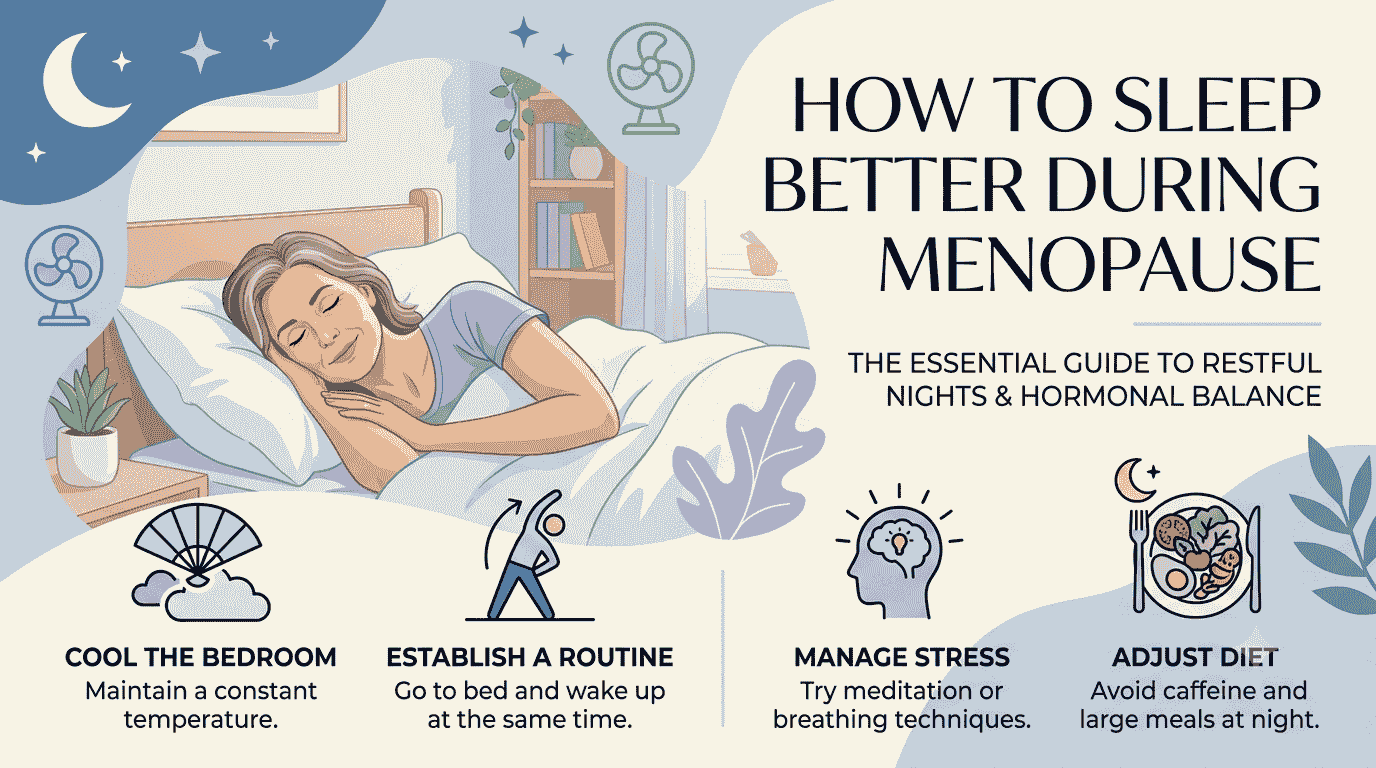
How to sleep better during menopause — the real reasons sleep falls apart during this stage, and what actually helps beyond “try melatonin.”
How to Sleep Better During Menopause
3am, wide awake, sheets damp, heart going slightly too fast for no obvious reason — and then, somehow, still tired the next afternoon despite technically being “asleep” for seven hours. That specific combination is one of the most common complaints during perimenopause and menopause, and it rarely gets explained well. Most advice defaults straight to melatonin gummies and calling it done.
The sleep disruption during this stage isn’t really about bad sleep habits. It’s hormonal, physiological, and in a lot of cases genuinely disruptive enough to affect work, mood, and relationships — not a minor inconvenience to just push through.
Here’s what’s actually happening and what tends to help, beyond the surface-level advice.
Why Sleep Falls Apart During Menopause Specifically
Estrogen and progesterone both play direct roles in regulating sleep, and as they decline during perimenopause and menopause, several things shift at once. Progesterone has a mild sedative effect on its own, so its drop can make falling and staying asleep harder. Estrogen decline is tied to the temperature regulation issues behind hot flashes and night sweats, which are one of the most disruptive sleep interrupters during this stage — waking up because your body’s internal thermostat is misfiring, not because anything external changed.
On top of that, hormonal shifts affect how the brain regulates the stress hormone cortisol, which can mean waking up around 3 or 4am with a racing heart or a jolt of anxiety that seems to come from nowhere. It’s a real physiological pattern, not something imagined or exaggerated.
Managing Night Sweats Is Often the First Real Fix
If hot flashes and night sweats are the main disruptor, the sleep problem is downstream of a temperature problem — so that’s usually the more effective place to start rather than jumping straight to sleep aids.
A few things that make a measurable difference:
- Moisture-wicking sleepwear and bedding, rather than cotton, which tends to trap and hold moisture once you start sweating
- Keeping the bedroom cooler than feels necessary — around 65°F (18°C) — since your body’s baseline is already running warmer during flashes
- Layering blankets instead of one heavy comforter, so it’s easy to adjust mid-sleep without fully waking up
- A cooling pillow or gel pad, which sounds minor but genuinely helps for people whose flashes concentrate around the head and neck
For some people, hormone therapy meaningfully reduces the frequency and severity of hot flashes and night sweats, which in turn improves sleep. That’s a conversation worth having directly with a doctor, since it depends on individual health history — not something to sort out from a blog post.
The 3am Wake-Up Deserves Its Own Approach
Waking abruptly in the middle of the night, often with a racing heart, is different from trouble falling asleep initially, and it usually needs a different response. Lying there trying to force sleep back tends to backfire, since the adrenaline from that abrupt wake-up takes a while to settle on its own.
What tends to help: getting up briefly rather than staying in bed frustrated, doing something dim and low-stimulation for 15–20 minutes, and going back once the racing feeling has actually passed rather than the moment you feel sleepy again. Slow, deliberate breathing — a longer exhale than inhale, specifically — helps bring the nervous system down faster than most other in-the-moment techniques.
Alcohol and Caffeine Do More Damage Than Usual During This Stage
Both were probably manageable before, in a way they often aren’t anymore. Alcohol metabolizes into compounds that disrupt the deeper stages of sleep a few hours after drinking, and the hormonal shifts already happening during menopause seem to amplify that effect — a glass of wine that used to have no noticeable impact can now mean a fragmented night.
Caffeine’s half-life doesn’t change, but sensitivity to it often does. An afternoon coffee that was fine for years might now be enough to interfere with falling asleep, simply because the body’s processing and stress-response systems are more reactive during this transition.
Exercise Timing Matters More Than the Exercise Itself
Regular movement genuinely helps sleep quality during menopause — it’s one of the more consistently supported recommendations. But timing matters: intense exercise late in the day can raise core body temperature and cortisol right when both are supposed to be dropping for sleep. Morning or early afternoon workouts tend to support better sleep than evening ones during this particular stage, even if evening exercise worked fine in the past.
Strength training in particular gets flagged often for menopausal sleep support, not just cardio — likely tied to its broader effects on mood regulation and stress hormone balance, both of which are already under more pressure during this transition.
When It’s Worth Talking to a Doctor, Not Just Trying More Habits
Sleep disruption during menopause is common, but “common” doesn’t mean it has to be endured indefinitely, and it doesn’t always resolve with lifestyle changes alone. Worth bringing to a doctor if:
- Night sweats are frequent enough to disrupt sleep most nights, not occasionally
- Anxiety or a racing heart at night feels disproportionate or is new
- Daytime exhaustion is affecting work, driving, or mood regularly
- Sleep issues have lasted several months without meaningful improvement from habit changes
Hormone therapy, certain non-hormonal medications, and cognitive behavioral therapy for insomnia (CBT-I) are all legitimate, evidence-supported options depending on individual circumstances — this stage of sleep disruption is treatable, not just something to manage indefinitely on your own.
A Realistic Nightly Setup
Not a perfect routine — a workable one:
- Cooler bedroom than usual, moisture-wicking sheets if night sweats are frequent
- Caffeine cut off earlier in the day than it used to need to be
- Alcohol, if any, earlier in the evening rather than right before bed
- Exercise earlier in the day when possible
- A plan for 3am wake-ups that doesn’t involve lying there getting more frustrated — get up, stay dim, go back when the racing feeling passes
FAQ
Why do I wake up at the same time every night during menopause?
It’s often linked to shifts in cortisol regulation caused by declining estrogen and progesterone, which can produce a racing-heart wake-up in the early morning hours.
Does hormone therapy help with menopause-related sleep problems?
For many people, yes, primarily by reducing hot flashes and night sweats that were disrupting sleep. It’s a decision to make with a doctor based on individual health history.
Why does alcohol affect sleep more during menopause than it used to?
Hormonal shifts appear to amplify alcohol’s disruption of deeper sleep stages, so an amount that was once fine can now cause more fragmented sleep.
Is it normal to need a cooler bedroom during menopause?
Yes — hot flashes and night sweats mean the body’s temperature regulation is already running warmer than usual, so a cooler room than before often helps.
When should menopause-related sleep issues be discussed with a doctor?
If night sweats are frequent, daytime exhaustion is affecting daily life, or sleep hasn’t improved after several months of habit changes, it’s worth a conversation rather than continuing to manage it alone.